

Category Archives: Uncategorized

L-R. Mr Layland, Senior Leadership Team, Mr Reygate, Head of PE, Pent Valley, PFP Project Manager with the Peace Fields Poppy Ball.
Kent and Flemish Schools remember WW1 Christmas Truces through football.
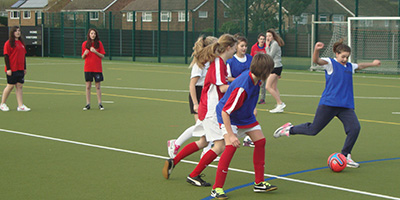
Students from Pent Valley Technology College in Folkestone and Thamesview School in Gravesend were joined by Middle School and Provincial Technical Institute from Ypres in Belgium, they played football matches to mark the centenary of the games that took place during the World War 1 Christmas Truces – in a project backed by Prince William.
The match was part of the Football Remembers project from the British Council, The FA, the Football League and the Premier League – which will see every level of football mark the anniversary in a week of commemoration.
Over 70 Students from across the four schools participated in a number of learning activities together related to the Christmas Truce before playing a football tournament which commenced after the Last Post which was played by one of the students before kick off. The schools are currently working together in a European Funded Comenius Regio project EASIER – Facing the Great War where the students from the two countries are researching their shared history of the Great War.
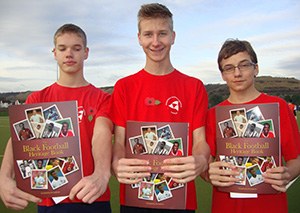
At the end of the matches all participants received medals and the students exchanged gifts, in the spirit of the Christmas Truce. Jim Cadman, author of The Black Football Heritage Book, in partnership with The National Children’s Football Alliance, donated a copy of the Heritage Lottery Funded book to each participant. The book features one of Folkestone’s First World War heroes Walter Daniel John Tull who was the first ever black outfield player to play professional league football. During the First World War, he served in the Middlesex Regiment and fought at the Battle of the Somme in 1916. He was commissioned a Second Lieutenant on 30th May, 1917. Tull was commended for his gallantry and coolness whilst fighting in Italy leading 26 men on a raiding party in enemy territory. He was killed in action on 25th March 1918. Each school also received a One World Peace Field Poppy Ball as a memento of the centenary event.

The One World Flanders Peace Field Poppy Ball that kicked off the first of many events to commemorate WW1 and celebrate peace.
The schools marked the occasion by tweeting a photo of the two teams standing together with the hashtag #FootballRemembers and the name and location of the school. Their image will be featured on a special website – www.footballremembers.com – where it will sit alongside photos from teams across the country, including some of football’s biggest names. The website will be a permanent tribute to the soldiers who laid down their arms on Christmas Day 1914.
The students have been learning about the Christmas Truce with the help of a Football Remembers education pack, which more than 30,000 schools across the UK received in May. It includes resources to help children learn about the Truce – including eye-witness accounts, photos, drawings and letters from soldiers some of which have never been published before.
HRH The Duke of Cambridge – President of The FA – said: “We all grew up with the story of soldiers from both sides putting down their arms on Christmas Day, and it remains wholly relevant today as a message of hope over adversity, even in the bleakest of times.”
Vicky Gough, Schools Adviser at the British Council, said: “The impromptu games of football that happened along the Western Front 100 years ago are an incredible example of how people-to-people connections can triumph in the midst of a global conflict. It’s a powerful lesson for all our children.”
SCHOOL PLAYING FIELDS
TWINNED WITH
PEACE VILLAGE AND FLANDERS PEACE FIELDS
National Children’s Football Alliance and the Peace Village, Mesen, Belgium, are commemorating WW1 and celebrating peace through the 1914 Christmas Truce by offering schools, clubs and public play areas with the opportunity to twin a designated area of play with Flanders Peace Fields, site of the Christmas Truce. This is open to all schools, clubs and public play areas across United Kingdom and Republic of Ireland.
This unique offer will directly link your area of play with one of the most famous fields in world history. Flanders Peace Fields lend themselves to education in a way that brings cultures, young and old together. Click here for the 3 key steps in how to apply for your Peace Field Declaration.
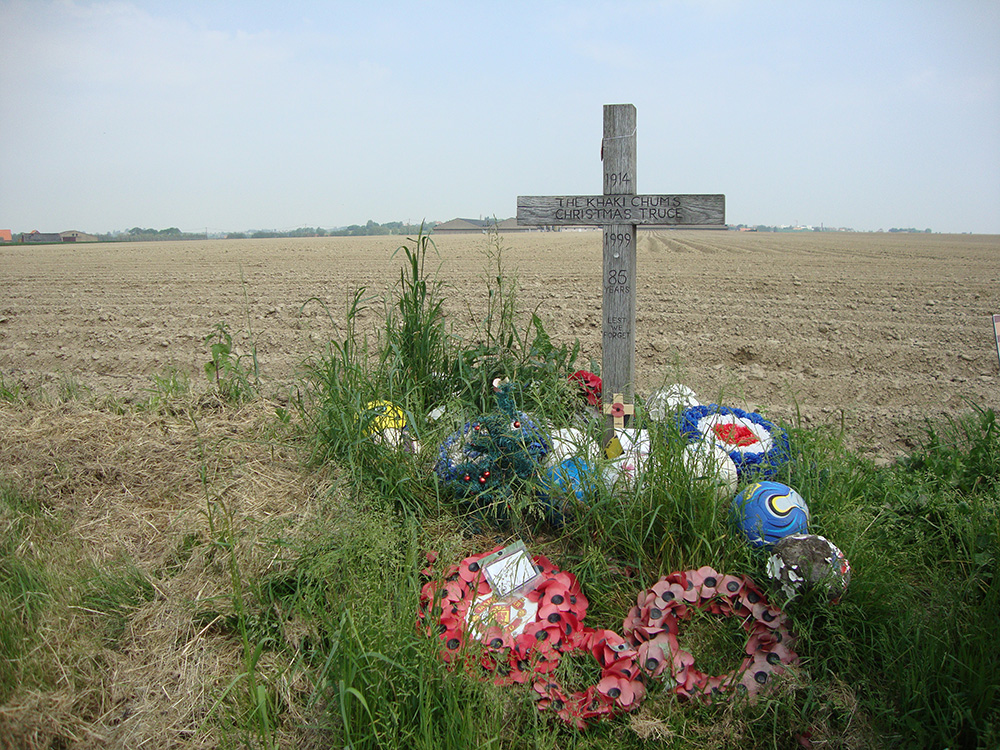
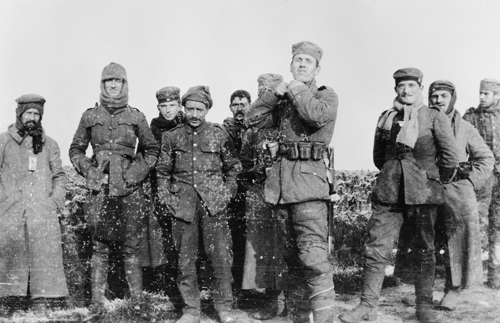
In the week leading up to Christmas 1914 groups of German, British and alley soldiers stopped fighting to sing festive songs. Some on Christmas Eve and Christmas Day ventured in to “No man’s land” to exchange gifts and to play games of football.
Today the truce is remembered as a symbolic moment of peace and humanity. An action taken by soldiers caught up in the conflict that was The First World War. Arguably, the horrors of war made men turn to a form of childhood to play a game of football to momentarily forget their tragic situation. It was a humanitarian act that every child and adult needs to engage in together.
Hosted by South East Grid for Learning & National Children’s Football Alliance
Kent & Medway Schools’ 1914 Christmas Truce Project
The Kent Schools’ 1914 Christmas Truce will take place across Kent & Medway during the week of the 24th – 28th November 2014. It is an opportunity for schools and their pupils to:
- Research and find out if soldiers from their local area took part in this special event
- Plan a 1914 Christmas Truce Assembly
- Write and publish poems, postcards and Christmas Greeting cards like the soldiers in the trenches did in 1914
- Design and create 2 and 3D Artwork to depict life in the Trenches
- Dedicate a part of your school grounds as a “Peace Field” in memory of the events of 1914
- Participate in friendly sports games with other schools
- Participate in on-line question and answer sessions with local historians about the symbolic importance today of The 1914 Christmas Truce
How can my school take part?
Schools can opt to take part in some or all the cross-curricular activities designed for Key Stages 1 and 2 pupils. To outline the programme a workshop day for teachers at The EIS Centre, Oxford Road, Maidstone from 13:30 to 16:30 on Thursday 19th June 2014
All schools attending the Workshop will be given a 1914 Christmas Truce pack and be invited to take part in the planned activities taking place during the week of.
To attend please sign and return the slip below by Friday 13th June 1914.The cost to attend this workshop is £70.
Please click on the Booking Form about the workshop details and click on the Agenda to accompany the workshop.
For more information please contact:
Phil Bracegirdle (SEGfL Associates) E-mail: pbracegirdle@segfl.org.uk
Chapter 1
There were many ways that the British government got young men to join the army. One of the ways that they got men to join the army is propaganda posters, these were very helpful to the British government also men gave out incorrigible speeches and many men joined. Propaganda posters were very effective in ww1 because they persuaded you to join up and fight in the war
Women also played a major part in getting man to fight. The Whit Feather campaign was a way of trying to shame men into joining up. Groups of women would patrol high street and town centres handing out white feathers- a symbol of cowardice – to any man who seemed fit enough to fight and who was not in military uniform. This sort of public humiliation was enough to see Some men join immediately.
The government also agreed to keep friends together who joined up at the same time. These units were called pals battalions and sometimes whole football team’s orchestras, cricket teams or bus deports would sign up together sadly most all friends would watch each other die.
In 1914, at the start of the First World War, Lord Kitchener became Secretary of State for War, a Cabinet Minister. One of the few to foresee a long war, he organised the largest volunteer army that Britain, and indeed the world, had seen and a significant expansion of materials production to fight Germany on the Western Front. His commanding image, appearing on recruiting posters demanding “Your country needs you!” remains recognised and parodied in popular culture to this day. Despite having warned of the difficulty of provisioning Britain for a long war, he was blamed for the shortage of shells in the spring of 1915 – one of the events leading to the formation of a coalition government – and stripped of his control over munitions and strategy.
Lord Kitchener the secretary of war promised that it would be over by Christmas so all soldiers joined up knowing they would be back for their family for Christmas.